
Current Status: Closed Testing > FaceDown is currently in the Google Play Closed Testing phase.
I am actively looking for testers to help bring this app to production! If you would like to provide feedback, please reach out to me.
For now, you can download the APK here.
Note: This repository is a technical showcase for a private productivity application called "FaceDown". It contains sanitized snippets of the core engineering challenges to demonstrate architectural and technical capabilities.
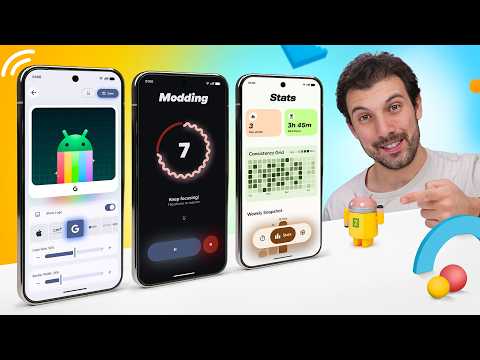
Featured in HowToMen's "Top 15 Best Android Apps" - "Honestly a really great app to help you stay more productive."
FaceDown is a minimal timer that enforces focus by requiring the user to place their phone face down on a table. If the phone is picked up or flipped over, the timer pauses, ensuring a distraction-free environment.


The core mechanic relies on the device's accelerometer. I implemented a clean Flow-based repository that bridges the legacy SensorManager callback API with modern Kotlin Coroutines.
- Debouncing: Logic ensures minor vibrations don't trigger state changes.
- Battery Efficiency: The listener is automatically unregistered when the UI lifecycle stops collecting the Flow (via
awaitClose).
(See SensorLogic.kt for the full implementation)
Instead of using a heavy charting library for the simple weekly statistics, I built a custom Jetpack Compose Canvas component.
- Performance: Draws the entire chart in a single pass.
- Animation: Uses independent
Animatablestates for each bar to create a staggered "wave" entrance effect. - Responsiveness: Calculates geometry dynamically based on available width.
(See WeeklyStatsChart.kt for the drawing logic)
The core timer loop runs within a robust Android Foreground Service to guarantee execution even when the device is dozing.
- State Machine: This reactive stream powers the "Grace Period" logic, automatically triggering the 10-second recovery window when the
OrientationStateshifts toFaceUp. - Haptics & Audio: interacting with
VibratorandAudioPlayerfor completion alarms and success feedback, respecting user preferences viaSettingsRepository.
The app interacts directly with the Android System Services to mute notifications during deep focus. This requires handling runtime permissions (ACCESS_NOTIFICATION_POLICY) and managing the Interruption Filter state safely.
The app follows the recommended Clean Architecture guidelines, separating concerns into Data, Domain, and UI layers.
com.arekb.facedown
├── data                 # Data Layer (Repositories, Sources)
│   ├── database         # Room Entities & DAOs
│   ├── sensor           # Accelerometer Implementation
│   └── timer            # System Service Wrappers
├── domain               # Domain Layer (Pure Kotlin)
│   └── model            # Core Business Models (FocusSession, etc)
├── ui                   # UI Layer (Jetpack Compose)
│   ├── home             # Timer & Canvas Charts
│   ├── stats            # Statistics & History
│   └── settings         # Statistics & History
└── di                   # Hilt Dependency Injection Modules
- Languages: Kotlin
- UI: Jetpack Compose (Material 3 Expressive)
- Architecture: MVVM, Clean Architecture, Single Activity
- DI: Hilt
- Async: Coroutines & Flow
- Local Data: Room Database
- Hardware: Android SensorManager (Accelerometer)
View Full Screenshot Gallery


- UI/UX inspired by the Tomato App.